

7-10 Tons Per Hour Feed Pellet Manufacturing Plant Animal Feed Processing Line for Poultry & Livestock
Ring die feed system. High-temp sterilization. Boosts FCR and digestibility.
Complete 7-10 t/h plant. 4-5 operators. Precision batching ensures quality.
All-in-one feed solution. Grinding to cooling. Cuts costs, fast payback.
7-10 Tons Per Hour Feed Pellet Manufacturing Plant
Animal Feed Processing Line for Poultry & Livestock
The 7-10 Tons Per Hour Feed Pellet Manufacturing Plant is a complete, high-capacity animal feed processing line designed for commercial feed production. This fully integrated system transforms raw grains and ingredients into high-quality, uniform feed pellets for poultry and livestock. With PLC intelligent control, the line ensures consistent output, precise batching, and efficient operation with minimal manual intervention.
Specifications
| Parameter | Specification |
|---|---|
| Production Capacity | 7 – 10 tons per hour |
| Pellet Size Range | 1.5 – 12 mm (adjustable) |
| Applicable Animals | Poultry (chicken, duck, goose), Livestock (pig, cattle, sheep, goat), Aquaculture (fish, shrimp), Rabbits |
| Automation Level | PLC intelligent control, automatic batching |
| Operators Required | 4 – 5 per shift |
| Main Motor Power | 75 – 110 kW (pellet mill) |
Applications
-
Commercial feed manufacturing plants producing bagged or bulk feed for sale
-
Large-scale poultry farms (100,000+ broilers or 50,000+ layers)
-
Large livestock operations (3,000+ pigs or 1,000+ cattle)
-
Integrated farms combining crop and animal production
-
Farmer cooperatives centralizing feed production for members
-
Custom feed processing services for surrounding farms
Production Process
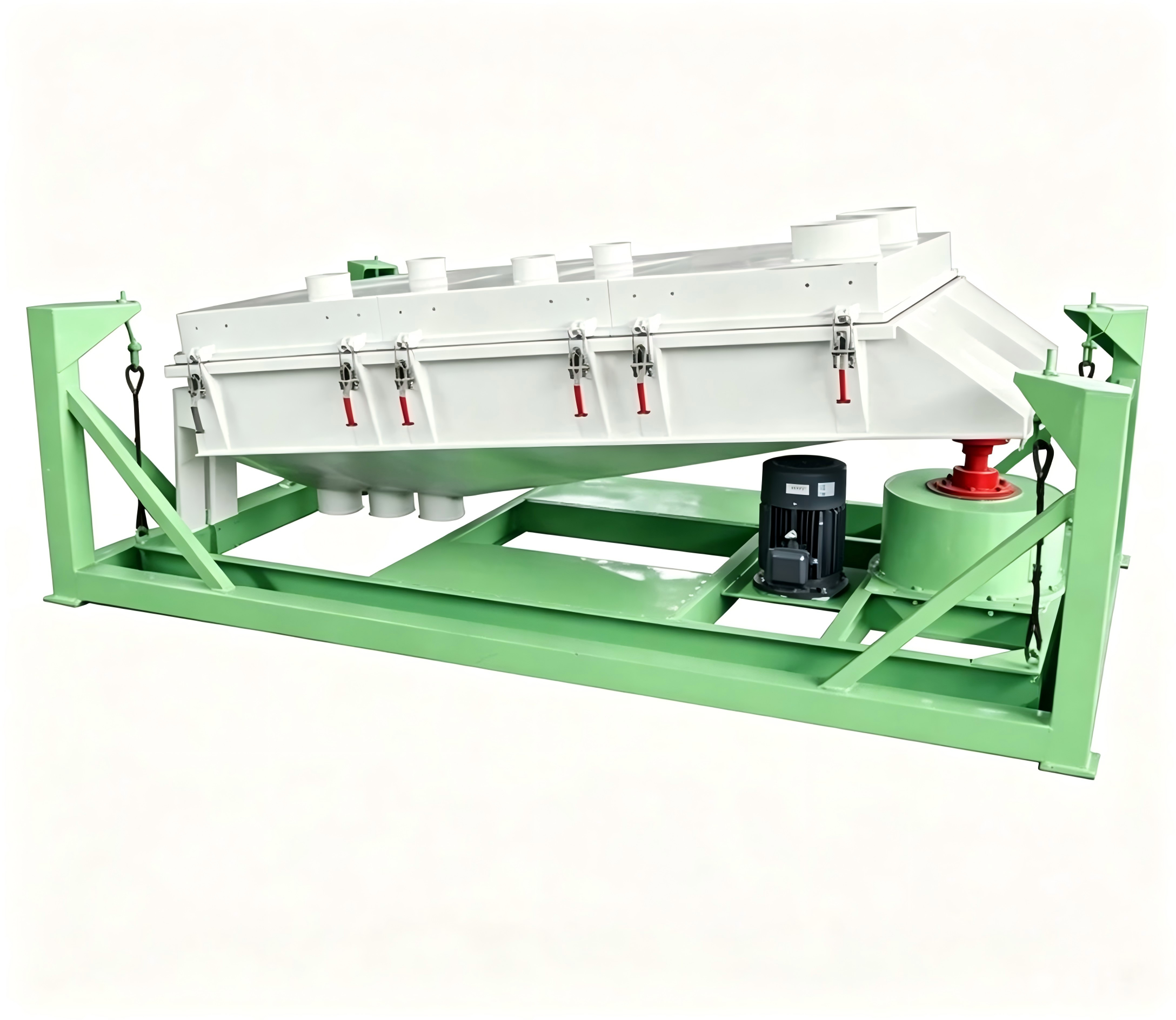
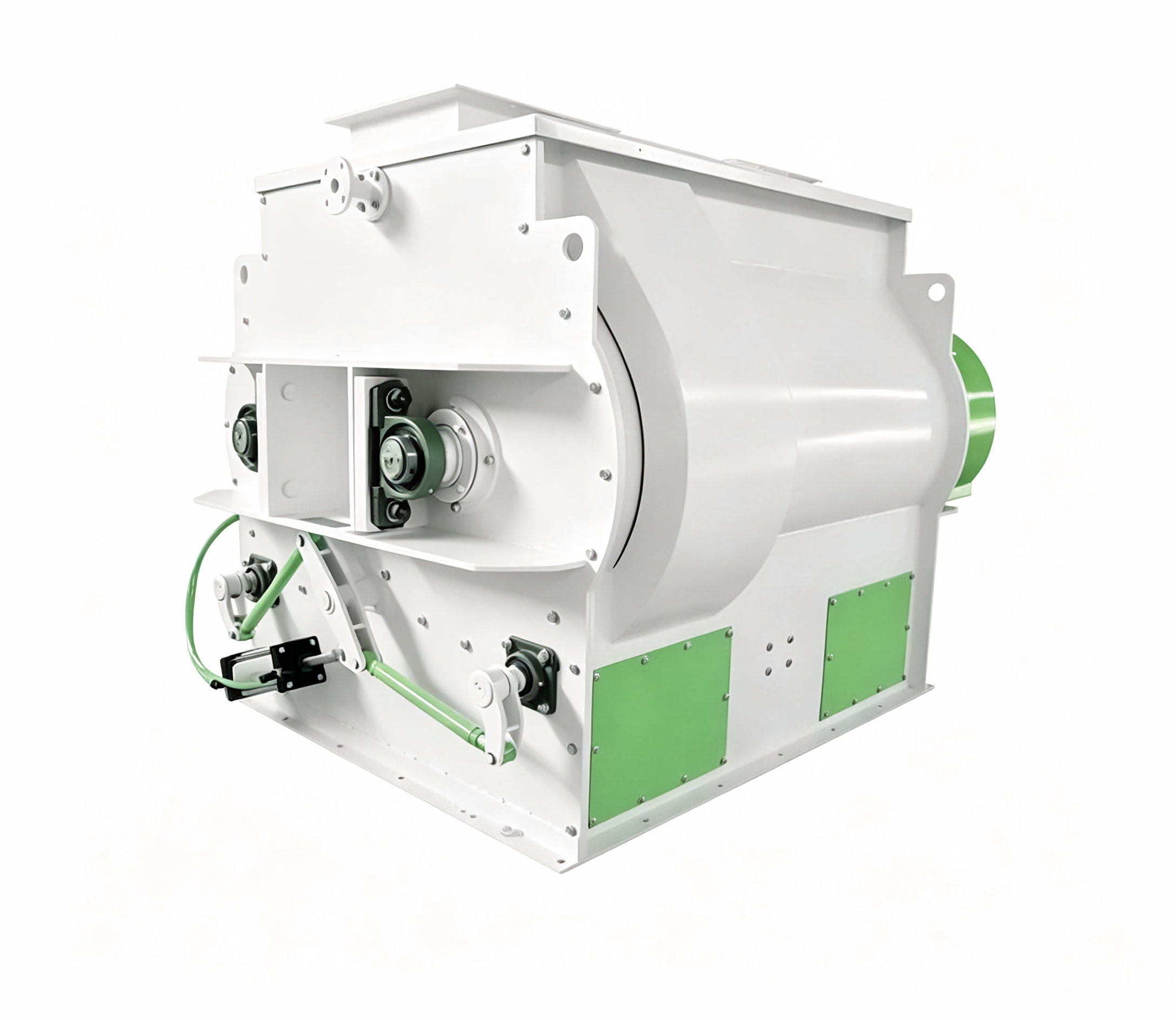
Raw materials enter through receiving and cleaning, then pass through hammer mills for grinding. The automatic batching system weighs and proportions ingredients according to customized formulas. Mixers blend all components uniformly before the ring die pellet mill compresses the mixture into dense pellets. A counterflow cooler reduces temperature and moisture, and a screener separates fines from finished products. Finally, pellets are conveyed to automatic bagging and sealing equipment.
Key Advantages
-
PLC automatic control – Minimizes human error, ensures batch-to-batch consistency
-
High-temperature sterilization – Kills pathogens during pelleting, improves animal health
-
Reduced feed waste – Pellets prevent ingredient segregation and selective feeding
-
Improved FCR – Gelatinized starches enhance digestibility and feed conversion
-
Labor savings – Only 4-5 operators per shift for the complete line
-
Durable pellets – Hard, uniform pellets resist breakage during transport and storage
Recommended Pellet Sizes
| Animal Type | Pellet Diameter |
|---|---|
| Chickens | 3.0 – 3.5 mm |
| Pigs | 3.5 – 6.5 mm |
| Cattle / Sheep | 5.0 – 8.0 mm |
| Fish | 1.5 – 3.0 mm |
| Shrimp | 1.0 – 2.5 mm |
Main Equipment List
-
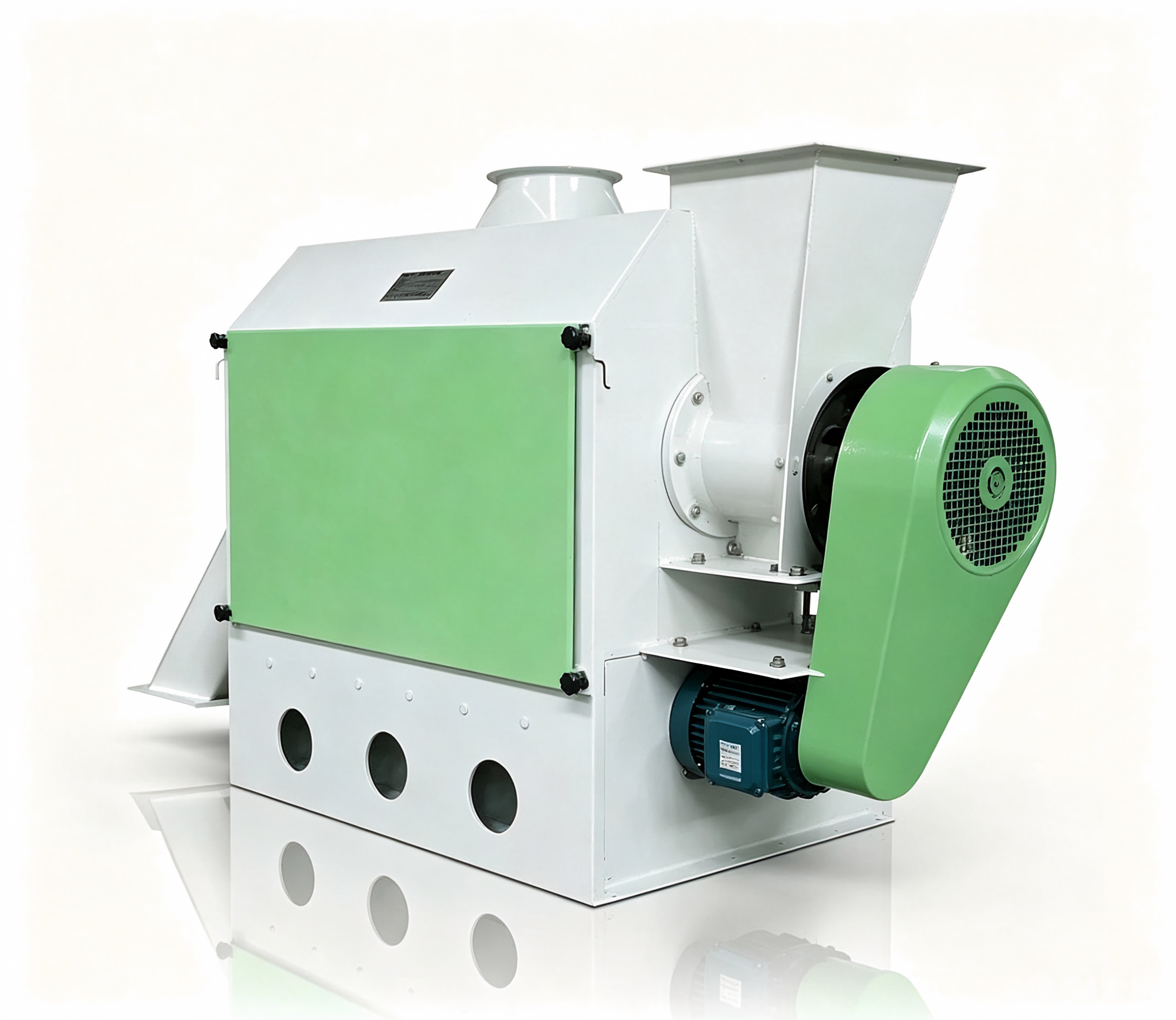
Hammer Mill – Raw material grinding
-
Automatic Batching Scale – Precision weighing of ingredients
-
Double-shaft Mixer / Ribbon Mixer – Uniform blending
-
Ring Die Pellet Mill – Core pelleting equipment
-
Counterflow Cooler – Cooling and moisture reduction
-
Vibrating Screener – Fines separation
-
Automatic Packing Scale – Weighing and bagging
-
PLC Control Panel – Centralized system control
-
Bucket Elevators & Conveyors – Material handling
FAQ
Q1: What is the actual output range of this line?
The line produces 7-10 tons per hour, depending on raw material characteristics, moisture content, and pellet size. Corn-based formulas typically achieve higher output than high-fiber formulas.
Q2: What raw materials can be processed?
The line processes corn, soybean meal, wheat bran, grains, fish meal, bone meal, oilseed cakes, forage, straw, vitamins, minerals, and various feed additives.
Q3: How many workers are needed?
Only 4-5 operators per shift are required. The PLC automatic control system centralizes all operations, significantly reducing labor costs.
Q4: What maintenance is required?
Regular inspection of wearing parts (ring die, rollers, hammer mill hammers), lubrication of bearings, belt tension checks, and magnetic separator cleaning. The ring die typically needs replacement after 1,000-3,000 hours of operation.
Q5: Can this line produce feed for multiple animal species?
Yes. By adjusting recipes and changing ring dies, the same line can produce poultry, pig, cattle, and fish feed. Proper cleaning between runs prevents cross-contamination.